Small devices, big challenges: recycling e-cigarettes
First they emit large amounts of vapour, then they are ground into dust to extract the sought-after “black mass” – we are talking about e-cigarettes, which, in their disposable version, generate large quantities of waste.
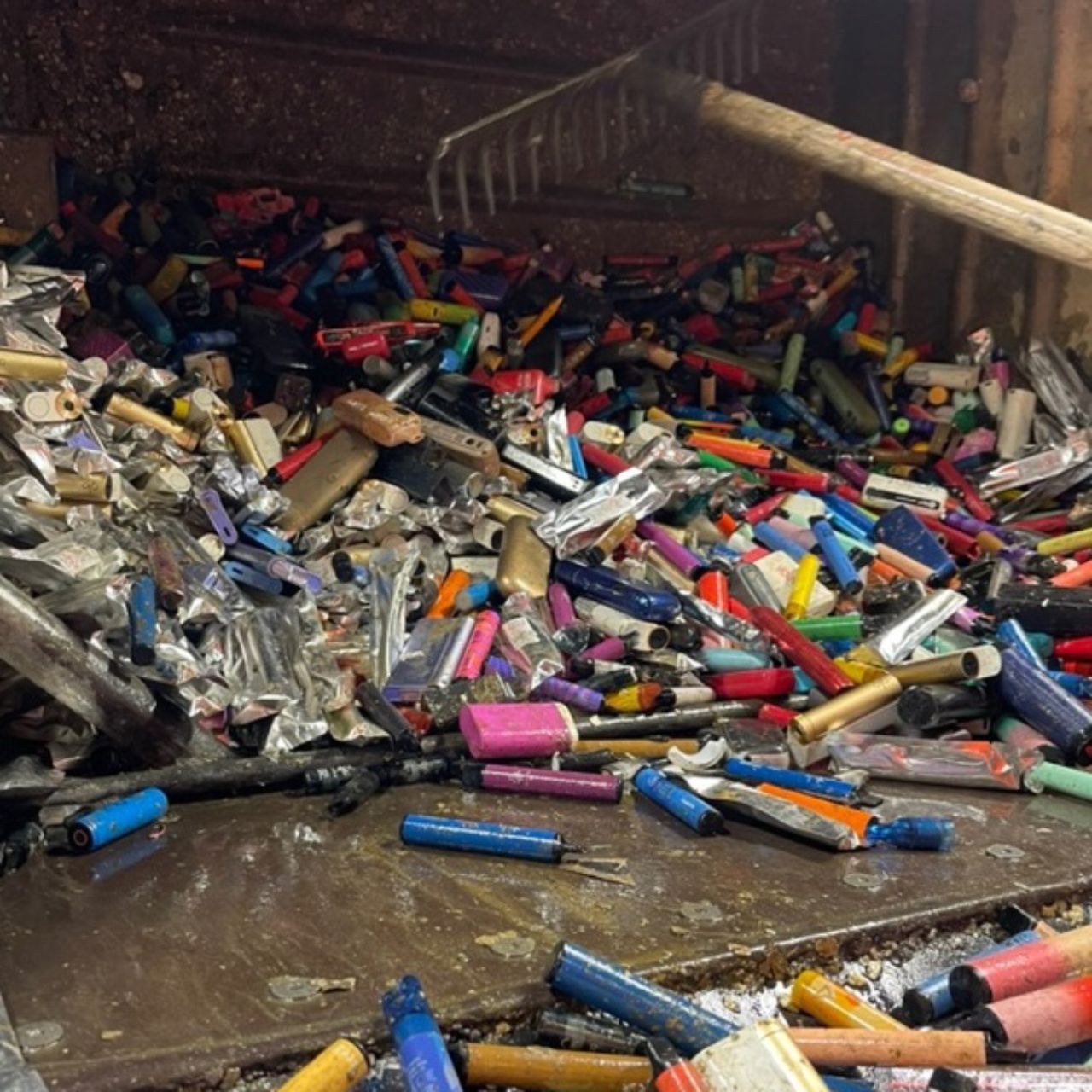
E-cigarettes are now available in an almost bewildering variety: as disposable or reusable devices in a wide range of designs, colours and flavours (Figure 3). Regardless of design and service life, all e-cigarettes are electronic devices that contain both valuable raw materials and permanently installed lithium-ion batteries.
Sales of e-cigarettes in Switzerland have increased significantly in recent years. An estimated 10 million e-cigarettes were imported into Switzerland in 2022.After several years of strong expansion, growth slowed in 2024, and volumes dipped slightly in 2025.Despite being classified as electronic devices, the majority of e-cigarettes have so far ended up in household waste or have been disposed of improperly, instead of being sent for proper collection and recycling.
Against this backdrop, SENS eRecycling and various partners initiated an industry solution for the environmentally sound disposal of e-cigarettes in 2023. The aim of this solution is the well-organised collection and safe recycling of devices in Switzerland. Since the industry solution was introduced, a structured option for the collection and recycling of e-cigarettes has been systematically provided.
Batrec Industrie AG processed a total of 61 tonnes of e-cigarettes in 2024, one year after the industry solution was implemented. In 2025, the collected volume amounted to 72 tonnes.
Collection and return
Consumers have the option of returning used e-cigarettes either at a point of sale, at one of around 630 SENS collection points or by postal services using “Vape Recycling Bags”. Currently, about one-third of actual returns are recorded through direct e-cigarette channels (points of sale and Vape Recycling Bags). Around two-thirds enter the collection system together with used batteries and are then transported to Batrec Industrie AG in Wimmis.
Because they are collected together with batteries, e-cigarettes are transported as hazardous goods in steel drums specially designed for this purpose. In an intermediate step to ensure safe transport, e-cigarettes from the direct e-cigarette collection system are also repacked into such drums. These safety measures are taken because integrated lithium-ion batteries pose a high fire risk if mechanically damaged or short-circuited. Lithium-ion batteries can ignite quickly due to their high energy density, the chemical reactivity of lithium and the organic electrolyte they contain. Once a lithium-ion battery is on fire, the fire itself generates additional oxygen, causing the battery to continue to burn even without access to air.
Disassembling e-cigarettes without causing a fire
In e-cigarettes, lithium-ion batteries are often installed in such a way that they are difficult to separate from the housing. The greatest challenge for recycling e-cigarettes is therefore to disassemble the devices containing lithium-ion batteries without causing a fire.
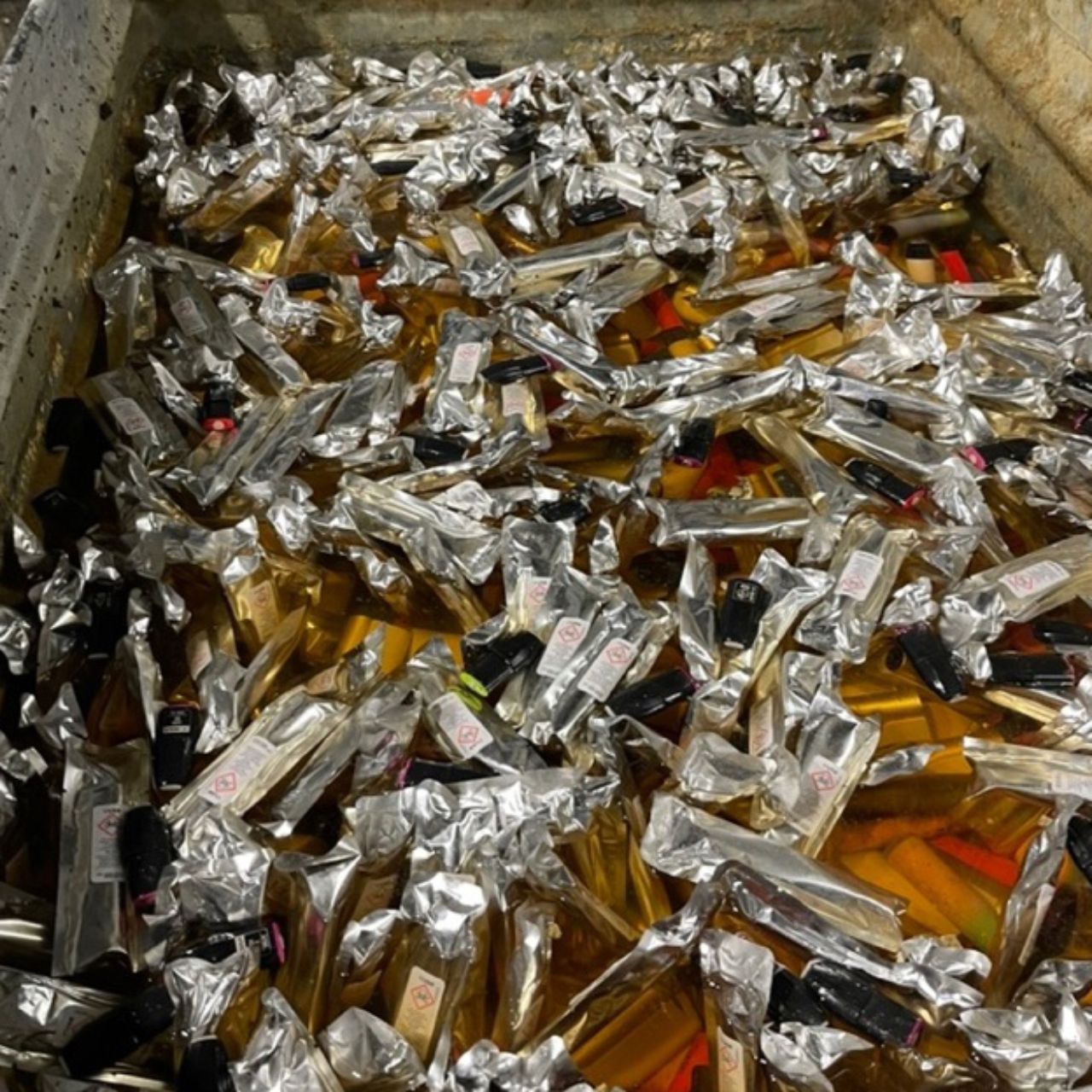
In the current recycling process, e-cigarettes are first manually separated from other battery types. The devices are then stored in a water bath under controlled conditions for a period of around one week (Figure 4). This step largely discharges the lithium-ion batteries and significantly reduces the risk of fire. Once discharge is complete, the water is drained off, and the e-cigarettes are sent for mechanical processing. At this stage of the process, the previously advertised range of flavours becomes apparent again when residual liquid is released during the shredding of the devices.
To prevent the formation of ignition sources, water is added while the devices are shredded. However, this means that the shredded mixture is damp after shredding. For separation to work well, the mixture has to be dried again. This is followed by separation into fractions, which are recycled or recovered by external processors. The fractions generated are: black mass, non‑ferrous metals, combustible material, and a mixed fraction of electronic components and housing parts, which is then further processed at a waste electrical and electronic equipment (WEEE) recycling facility.
Certification as a SENS recycling company
For licensing as a SENS recycling company, processing must be approved in a batch test according to EN standard 50625. Due to the capacity of the recycling plant, the batch processing involved five tonnes of e-cigarettes. During batch processing, all input and all output weights are recorded so that a complete mass balance for the process can be determined. The recycling facility must demonstrate how all fractions produced are further processed. Downstream recipients of these fractions must specify the treatment processes they use and identify the secondary raw materials produced. These declarations from the recipients must show the proportion by weight of the materials produced and how they are processed by subsequent recipients. With this full monitoring of the downstream channels, dedicated software can then be used to calculate the recycling rate and the recovery rate for the e-cigarettes.
A batch processing of this kind took place at Batrec Industrie AG at the end of 2025. The process involving the addition of water during the shredding step and subsequent drying placed specific demands on recording the inputs and outputs. Extensive weighing of the intermediate fractions was necessary because the process-related additions and losses of water could not be accounted for precisely. In addition, the “RepTool” software used to evaluate the batch tests is not set up to account for the addition of water and evaporation in the process properly. Because of this limitation, we had to consider carefully how to include the process water during the evaluation to ensure the final accounting was correct. After accounting for all processing inputs and outputs during the batch test, the process successfully met the SENS requirements.
Important findings were gained from the batch test. It was possible to determine the proportions of various elements in the black mass. We observed that the mass contained cobalt at a considerably higher concentration than lithium, which gives batteries their name. The purity of the remaining fractions was also analysed. These results should enable further process optimisation in future. It also became clear that the choice of recipient can strongly influence the recycling rate, since downstream processors do not all recover the same valuable materials from the black mass; consequently, recycling rates vary depending on the recipient considered.
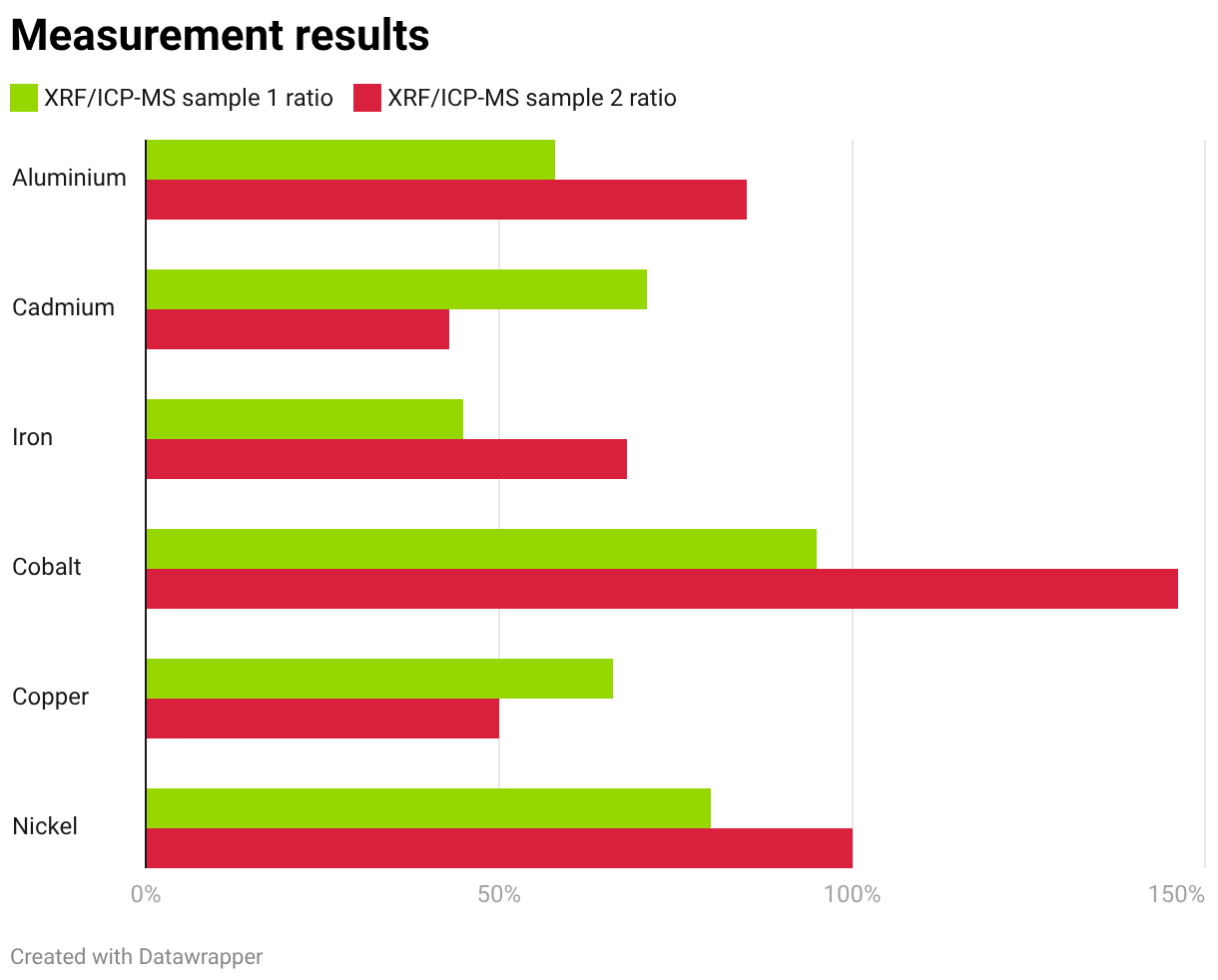
Because elemental analyses were performed by both inductively coupled plasma mass spectrometry (ICP-MS) and X‑ray fluorescence (XRF) fingerprinting, it was possible to examine the differences between the two measurement methods by way of example. It is apparent that the two methods can differ considerably when determining mass fractions. Figure XY lists the differences between elemental analysis and XRF, with the result of the elemental analysis set to 100% in each case and the result of the XRF fingerprint calculated as a percentage relative to this. The graphical representation shows that the levels of copper, iron and cadmium in the XRF fingerprint were measured at only around half the magnitude of those in the ICP-MS. For nickel and cobalt in sample 1, the results of both methods match. For cobalt in the second sample, however, the measured value in the XRF fingerprint was around 50% higher than in the ICP-MS. XRF fingerprinting is known for its inaccurate results, which is why the laboratory also describes them as “semi-quantitative”. The advantage of the XRF fingerprint is that it can inexpensively indicate which elements can be expected in a sample. However, an analysis using a mass spectrometer is required for accurate determination of the mass fraction.
Conclusion
It is apparent that recycling e-cigarettes is technically challenging but feasible. The successful batch trial demonstrates that standards-compliant processing with a traceable mass balance is possible, allowing recovery of valuable materials such as cobalt, nickel, and copper.
As the market grows, systematic collection of used e-cigarettes will become increasingly important. Safety risks can be minimised, recycling rates improved, and resources kept in sustainable circulation only if e-cigarettes are consistently returned through designated take‑back systems.